America’s Best Franchises (ABF) Brand Insight —
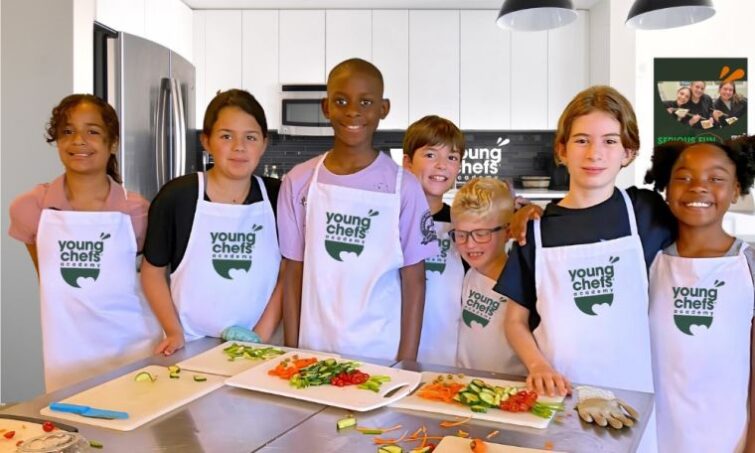
Young Chefs Academy built its model around a real kitchen that is a classroom rather than a portable cart or demo, and that choice defines the business. Children work at stations with actual equipment, which is why families treat it as a weekly after-school program vs a one-time experience. Revenue arrives from several directions at once — monthly memberships, seasonal camps, birthday parties, workshops, field trips, and adult programs — so the calendar fills from more than one source.
At a Glance
- Liquid Capital Required: $100,000 — readily available cash or cash-equivalent assets — not from borrowing, selling a primary residence, or relying on future income
- Ownership Model: Owner-operated or semi-absentee
- Location Type: Commercial teaching kitchen
- Time Commitment: Full-time or strategic oversight
- Experience Required: No culinary or teaching background required
About Young Chefs Academy
Founded in 2004, Young Chefs Academy pairs hands-on cooking instruction with a proprietary STEAM-based curriculum, teaching measurement, food science, nutrition, and cultural traditions alongside knife skills and technique.
Programs run from kindergarten through high school, with classes, camps, workshops, parties, and field trips built around a recurring membership platform. The system now includes roughly thirty locations across the United States, all franchised, operating from retail teaching kitchens in suburban family markets.

Why Own a Young Chefs Academy?
Young Chefs Academy leads children’s culinary education with a time-tested, innovative approach. For over two decades, we’ve perfected our engaging curriculum, efficient business model, and robust franchisee support. As experts in youth cooking classes and events, we empower owners to deliver enriching experiences to their communities.
- Recurring memberships create predictable monthly revenue rather than income that depends entirely on filling each class.
- Six revenue streams — memberships, classes, camps, parties, field trips, and adult programs — keep the kitchen busy.
- A proprietary STEAM-based curriculum is delivered weekly, so you never have to design a lesson plan.
- Programs span kindergarten through high school, so families stay with you for years rather than a season.
- Semi-absentee ownership is supported, letting you hire a manager and keep an existing career while you build.
Why This Opportunity, Why Now
ABF Market Analysis —
The children’s enrichment market in the United States was valued at roughly $3.43 billion in 2025 and is projected to nearly double by 2034. Parents are steadily shifting discretionary spending toward structured programs that build skills rather than simply occupy time, and cooking sits at an unusual intersection of the two. It teaches math, science, independence, and nutrition while looking like fun to the child. Food culture reinforces it constantly through cooking competitions, social media, and family programming.
ABF Timing Insight —
Young Chefs Academy has been refining this concept for more than twenty years, but the system remains around thirty locations, which means most suburban markets in the country have no Young Chefs at all. That is unusual for a brand with this much operating history. The curriculum, the membership platform, and the build-out playbook are already developed, so an owner today inherits two decades of refinement while still choosing from open territory. Established concept, early-stage footprint.

Training & Support
- Site location and build-out support guide you through finding retail space and configuring a health-department-compliant teaching kitchen with student stations.
- On-site initial training covers operations, curriculum delivery, and business management, and continues throughout the franchise relationship rather than ending at launch.
- A curated weekly curriculum arrives ready to teach, so instructors follow a plan rather than inventing new lessons each week.
- Franchisees receive a dedicated website and email domain, social media training, and marketing strategies and tools for local enrollment growth.
- A streamlined integrated operating system handles scheduling, memberships, and events, supported by ongoing business analysis and benchmarking against other locations.
Franchise Owners That Thrive
- Genuinely enjoy children and the energy they bring
- Organized enough to run a busy class calendar
- Comfortable hiring and developing instructors
- Active in schools, scouting, and homeschool networks
- Community-minded and visible at local family events
Who Is Not A Good Fit
- Buyers unwilling to commit to a commercial lease and kitchen build-out
- Anyone expecting fully passive ownership with no involvement
Frequently Asked Questions
Q: Do I need cooking or teaching experience?
A: No. Owners come from a range of professional backgrounds. The franchisor provides the curriculum, operational systems, and training, and instructors deliver the classes. What matters more is comfort hiring and managing staff and genuine enthusiasm for working with children and families.
Q: Can this be run semi-absentee?
A: Yes. The model supports hiring a manager to oversee daily operations while you focus on growth and strategy. Many owners keep an existing career during the build phase. It is not fully passive — expect regular involvement in hiring, marketing, and community relationships.
Q: What kind of space does this require?
A: A commercial retail location configured as a teaching kitchen, typically 1,600 to 1,800 square feet with multiple student cooking stations. Locations need appropriate plumbing, ventilation, and electrical capacity, health-department compliance, and convenient family parking. The franchisor assists with site selection and build-out.
Q: Does the franchisor disclose financial performance information?
A: Yes. The Franchise Disclosure Document includes an Item 19 financial performance representation with location-level results broken into quartiles. Review it with an accountant and pair it with validation calls to owners at a similar stage and market size to yours.
Q: How important is the leadership team when choosing a franchise?
A: Very important. A proven model matters, but the people leading the brand matter too. During due diligence, spend time with leadership and operations—not just franchise development—and ask how they prioritize franchisee profitability, support, and long-term brand health.
Next Steps
If you are drawn to a business built on recurring memberships, a real kitchen children look forward to visiting, a curriculum written for you every week, families who stay from kindergarten through high school, and a role in your community that parents genuinely value, Young Chefs Academy is worth a direct conversation. Complete the form below to request a qualification review and discuss territory availability for Young Chefs Academy.
This profile represents general franchise information. Individual results may vary. Refer to the Franchise Disclosure Document for complete details.
It is a great time to own a Young Chefs Academy.
Young Chefs Academy Franchisee discusses her experience as an owner of a kids cooking school franchise.
“There are so many moving pieces to opening a new business, and so that’s really why we chose a franchise, because all of those systems and methods are already in place for new owners. This allows you to progress quickly and not have that much of a learning curve.”