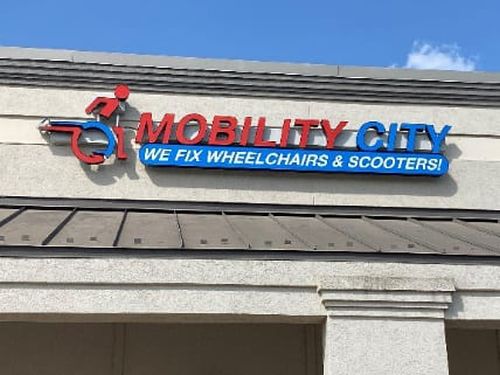
America’s Best Franchises (ABF) Brand Insight —
Mobility City occupies a deliberate position in the senior services category: a service-first franchise focused exclusively on mobility equipment repair, rental, sales, and sanitization. ABF tracks the brand as a category creator with no national competitor, serving an aging demographic through a cash-pay model that bypasses Medicare reimbursement complexity. Seven revenue streams across B2C and B2B service — including VA and national hospital contracts — distinguish Mobility City from durable medical equipment retailers and home health agencies operating in adjacent but different markets.
At a Glance
- Liquid Capital Required: $158,000 (readily available cash or cash-equivalent assets — not from borrowing, selling a primary residence, or relying on future income)
- Ownership Model: Owner-operator (no passive ownership)
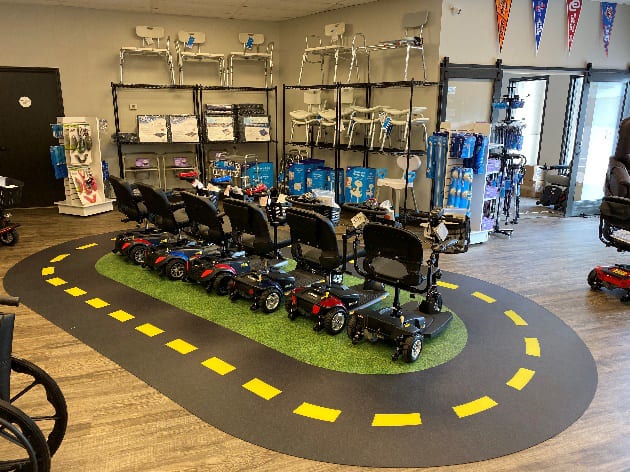
- Location Type: Showroom-based with mobile service component
- Time Commitment: Full-time, fully engaged owner
- Experience Required: Business management; healthcare or mobility experience helpful but not required
About Mobility City
Mobility City was founded in 1999 in Boca Raton, Florida, building on more than four decades of leadership experience in the home medical equipment industry. After validating the service-first repair, rental, and sales model in South Florida, the company refined its operational playbook and launched its franchise program in 2018.
Mobility City has grown to 96 awarded territories with 62 operating units across the U.S., supported by 119 national contracts. The brand serves seniors, veterans, hospitals, assisted living facilities, and rehabilitation centers through protected territories built around populations of one million or more.
Why Choose Mobility City
- First and only mobility equipment franchise serving an underserved category with no direct national competitor in the U.S.
- Cash-pay business model bypasses Medicare reimbursement bureaucracy that constrains durable medical equipment competitors and complicates revenue cycles.
- Seven revenue streams across B2C retail, B2B service contracts, sanitization programs, rentals, sales, consignment, and master service agreements.
- National contract infrastructure including VA, Red Cross, and 119 corporate accounts provides revenue continuity not available to independent competitors.
- Protected territories of one million or more residents enable scalable growth without overlap or internal franchise competition.
ABF Advisory Perspective
ABF Market Analysis —
The mobility equipment service category is structurally fragmented and underserved at the national level. Independent repair shops dominate local markets without brand infrastructure, marketing systems, or institutional contracts. Durable medical equipment retailers focus on selling new product but generally do not specialize in repair, rental, or sanitization services. Home health agencies handle caregiving but not equipment service. Mobility City’s category-creator position — service-first, branded, multi-stream, with national contract access — captures a structural gap that independent and adjacent competitors are not built to fill.
ABF Timing Insight —
Demographic tailwinds for mobility services are accelerating. The U.S. population aged 65 and older is expanding by approximately 10,000 people daily, with more than 100 million Americans now over age 55. Aging-in-place preferences are shifting demand from facility-based care to home-based mobility solutions. Hospital discharge protocols increasingly require mobility equipment for patient transitions, generating institutional demand. Mobility City’s combination of cash-pay positioning, established VA contract infrastructure, and protected million-person territories aligns directly with where the demand is concentrating in 2026 and beyond.
Training & Support
- Pre-launch integration spans business setup including bank accounts, insurance, licensing, vendor onboarding, CRM configuration, showroom planning, staff recruiting guidance, and pre-learning product modules during weeks one through two.
- Virtual training academy in week three covers equipment categories, product features, repair fundamentals, scheduling and routing, sales engagement, national accounts, VA institutional servicing, and safety standards.
- In-person training week at Boca Raton headquarters delivers full product demos, hands-on repair training, showroom operations, marketing workshops, leadership sessions, and ride-along field operations with technicians.
- Launch week support pairs each owner with a dedicated launch specialist covering opening preparation, first rentals and repair orders, staff coaching, customer scripts, and initial marketing activation.
- Ongoing support includes weekly franchisee calls, monthly performance roundtables, dedicated business coach, 24/7 urgent operational support, manufacturer webinars, and continuous SOP and playbook updates.
Our Ideal Franchisee Candidate
- Mission-driven operators committed to serving seniors, veterans, and disabled customers
- Service-business managers comfortable running showroom and mobile operations simultaneously
- Relationship builders capable of developing healthcare and institutional accounts
- Operators with capital for showroom buildout and inventory investment
- Owners willing to be hands-on during market establishment phase
Who Mobility City Is NOT For
- Buyers without $158,000 in readily accessible liquid capital
- Operators seeking home-based or fully passive ownership models
- Candidates uncomfortable with showroom retail and mobile service operations
- Buyers expecting Medicare-reimbursed revenue or insurance billing infrastructure
- Owners unwilling to develop B2B healthcare and institutional relationships
Frequently Asked Questions
Q. Is Mobility City a good investment?
A. Mobility City operates in an underserved category with no national competitor, serving an aging population growing by 10,000 people daily. The 2024 Item 19 disclosed by the Boca Raton corporate-operated unit shows total income of $972,197 with net profit of $189,554 after franchise-equivalent fees. Investment fit depends on appetite for showroom operation, mobile service management, and healthcare account development.
Q. Does Mobility City accept insurance or Medicare?
A. No. Mobility City operates as a cash-pay business, which differentiates it from durable medical equipment retailers that depend on Medicare reimbursement. Customers pay directly for repairs, rentals, sales, and service. The cash-pay model bypasses reimbursement delays, claim denials, and billing infrastructure overhead that constrain insurance-dependent competitors.
Q. How do Mobility City franchisees acquire customers?
A. Customer acquisition combines retail showroom traffic, B2B referrals from hospitals, assisted living communities, rehabilitation centers, and home health agencies, and direct work orders from VA and national accounts. Franchisees develop ongoing relationships with healthcare facilities, manufacturers, and veteran organizations such as the Arthritis Foundation, ALS Association, and MS Society.
Q. How does the VA contract opportunity work?
A. Mobility City franchisees fulfill mobility equipment work orders through the brand’s national VA contract infrastructure. Veteran customers receive repair, rental, and service paid through VA channels, providing predictable institutional revenue alongside B2C retail and B2B facility work. Veteran service is also a core mission element of the brand.
Q. What does a Mobility City franchisee actually do day-to-day?
A. Owner-operators split time between showroom oversight, technician scheduling, B2B account development with healthcare facilities, and customer consultations. Repairs, deliveries, and in-home service are performed by trained technicians dispatched in branded service vehicles, while owners focus on growth, account management, and operational standards.
Q. Can a Mobility City franchisee operate multiple territories?
A. Yes. Mobility City offers master franchise opportunities and supports multi-unit growth for franchisees who establish initial territories successfully. Protected territories of one million or more residents allow significant single-territory scale before expansion becomes necessary, with regional development available for operators with broader ambitions.
Next Steps
If you are drawn to a category-creator franchise serving an aging demographic, with no national competitor, seven revenue streams across B2C and B2B, established VA and national contract infrastructure, and protected million-person territories, Mobility City is worth a direct conversation. Complete the form below to request a qualification review and discuss territory availability for Mobility City.
This profile represents general franchise information. Individual results may vary. Refer to the Franchise Disclosure Document for complete details.
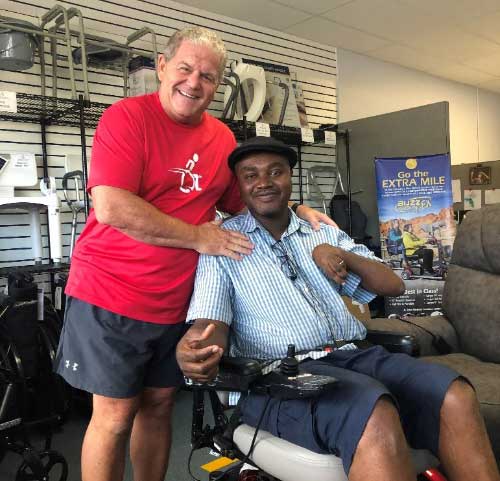
I was sold on the vision of Mobility City from the beginning. I really liked that Mobility City was new a brand and I was going to be part of building something great. I also saw it as an opportunity to serve others while building a business for my family.