
America’s Best Franchises (ABF) Brand Insight —
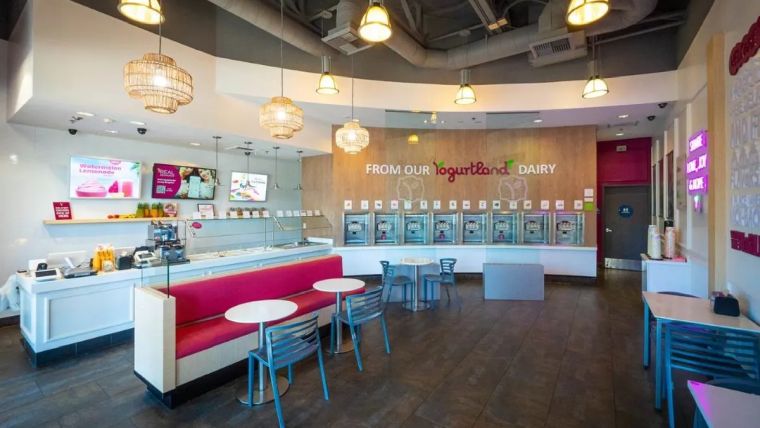
Self-serve frozen yogurt is a simpler business than most food concepts. There is no kitchen, no fryer, no line cook — guests serve themselves and pay by weight, which strips out both equipment cost and labor. Yogurtland created the category in 2006 and is now roughly 100% franchisee-owned. The operating model is the appeal: a small footprint, few employees, and a product mix that changes often enough to bring people back.
At a Glance
- Liquid Capital Required: $200,000 (readily available cash or cash-equivalent assets — not from borrowing, selling a primary residence, or relying on future income)
- Ownership Model: Owner-operator; multi-unit development preferred
- Location Type: Retail, 1,000–1,400 sq ft in-line or end-cap; non-traditional venues also available
- Time Commitment: Full-time
- Experience Required: None; food service or multi-unit retail experience helpful
About Yogurtland
Phillip Chang opened the first Yogurtland in Fullerton, California in 2006 and began franchising the following year. The system now operates more than 200 locations and is close to 100% franchisee-owned. Corporate headquarters are in Irvine, California, and products are sold only in Yogurtland stores.
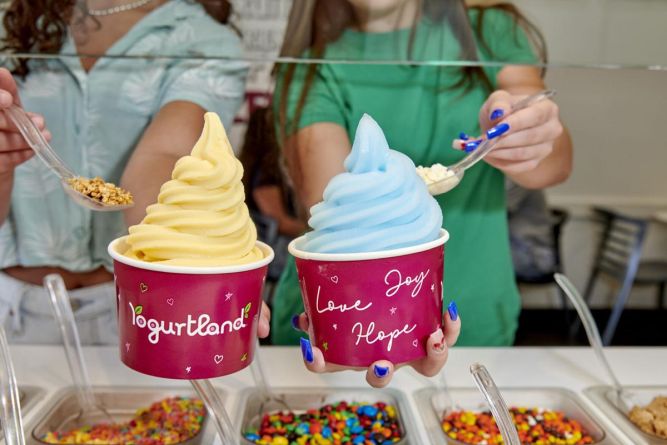
Guests serve themselves from a rotating lineup of proprietary small-batch yogurt flavors, then add toppings and pay by weight. Stores typically carry at least 16 flavors and 30 toppings, plus soft-serve ice cream and shakes. Dairy-free, gluten-free and no-sugar-added options are available.
Why Own a Yogurtland Franchise?
- Self-serve means a lean labor model and no cooking equipment, which keeps operating costs down.
- A small footprint of 1,000 to 1,400 square feet fits in-line and end-cap retail across many markets.
- Non-traditional locations — airports, stadiums, hospitals, colleges — usually require less cash than traditional sites.
- A rotating flavor lineup and 30-plus toppings give customers a reason to return frequently rather than occasionally.
- Products are sold only in Yogurtland stores, so no grocery channel competes with your location.
Why This Opportunity, Why Now
ABF Market Analysis —
Frozen dessert is a category people buy on impulse and in groups, which means location and visibility do most of the marketing. Yogurtland’s advantage inside it is operational rather than culinary: self-serve removes the kitchen, the labor and most of the equipment that make food franchises hard to run. The customer base skews toward families and younger adults, and the dietary options — dairy-free, gluten-free, no-sugar-added — widen the group that can order together.
ABF Timing Insight —
Yogurtland has been operating since 2006 and franchising since 2007, so store design, supply chain and flavor development are long settled. The brand is close to entirely franchisee-owned, which means corporate is not competing with owners for locations. Real estate flexibility is the practical opening: traditional end-cap sites and non-traditional venues both work, and the non-traditional route typically requires less capital.
Training & Support
- Multi-tiered training covers branding, business management, store operations, and product standards before opening.
- The store development team guides site selection, design and buildout through to opening day, using a flexible store format.
- National and global marketing programs are complemented by local campaigns, with qualified franchisees benefiting from a shared advertising fund.
- Post-opening support continues through operations guidance and participation in ongoing advertising campaigns.
- Product innovation is handled centrally, with new, seasonal and limited-edition flavors developed and rolled out across the system.
Franchise Owners That Thrive
- Comfortable managing hourly staff and scheduling
- Enjoys a high-traffic, customer-facing retail environment
- Willing to be involved in site selection and local marketing
- Follows brand standards on product and presentation
- Comfortable in a high-volume, fast-paced service setting
Who Is Not A Good Fit
- Cannot document at least $200,000 in liquid capital
- Uncomfortable signing a five or ten year retail lease
- Expects a home-based or mobile business
- Prefers to modify the product or store format
- Unwilling to be present in the store during opening and ramp-up
Frequently Asked Questions
Q: Do I need restaurant experience?
A: No. Training covers operations, product standards and business management, and the self-serve model is simpler to run than most food concepts.
Q: How large is a store?
A: Typically 1,000 to 1,400 square feet with at least 18 feet of frontage. End-caps and urban storefronts are preferred, and outdoor patio seating is a plus.
Q: What counts as a non-traditional location?
A: Airports, stadiums, hospitals, military bases, colleges, casinos, cinemas, travel plazas and big-box retail. These usually require less cash than a traditional site.
Q: Does Yogurtland sell through grocery stores?
A: No. Products are available only in Yogurtland locations, so your store is not competing with retail shelf distribution.
Q: Is Yogurtland looking for single or multi-unit owners?
A: Multi-unit development is preferred. Many owners open several locations within a single market.
Next Steps
If you are drawn to a food business with no kitchen, a small retail footprint, a lean labor model, and the flexibility to open in traditional or non-traditional locations, Yogurtland is worth a direct conversation. Complete the form below to request a qualification review and discuss territory availability for Yogurtland.
This profile represents general franchise information. Individual results may vary. Refer to the Franchise Disclosure Document for complete details.